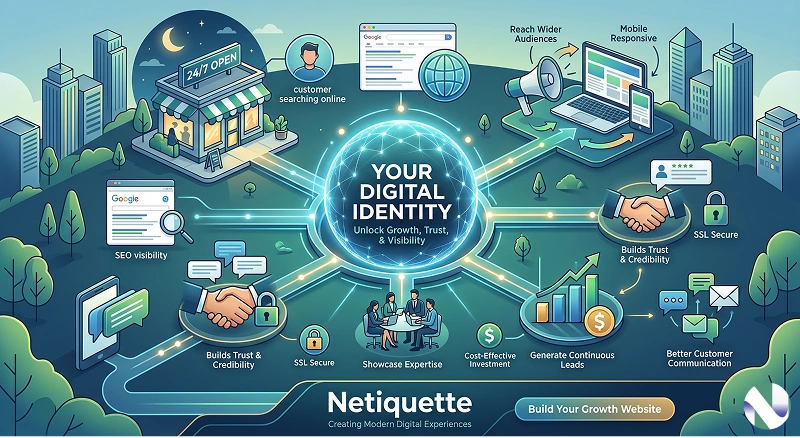
In today’s digital-first world, a professional website is no longer optional — it is one of the most important assets a business can have. Whether you run a startup, retail store, manufacturing company, consultancy, or service-based business, your website acts as your digital identity and often creates the first impression for potential customers.
With increasing internet usage and changing customer behavior, businesses without a professional online presence risk losing credibility, visibility, and valuable opportunities.
Your Website Is Your Digital Storefront
Before contacting a business, most customers search online to learn more about the company, products, or services. A professionally designed website helps establish trust and gives customers confidence in your brand.
A website allows businesses to:
- Showcase products and services
- Share company information
- Display testimonials and reviews
- Provide contact details
- Generate leads and inquiries
- Build long-term credibility
Without a website, customers may question the authenticity or professionalism of the business.
First Impressions Matter
Studies show that users form an opinion about a website within seconds. An outdated or poorly designed website can drive visitors away quickly.
A professional website focuses on:
- Modern design
- Mobile responsiveness
- Fast loading speed
- Easy navigation
- Clear messaging
- Professional branding
An attractive and user-friendly website improves customer engagement and increases the chances of conversions.
A Website Helps Customers Find Your Business
Search engines like Google have become the primary way customers discover businesses. Without a website, your business has limited visibility online.
With proper SEO (Search Engine Optimization), your website can appear in search results when customers search for services related to your business.
For example:
- “Web development company near me”
- “Best digital marketing services”
- “Corporate website design”
- “SEO services for small business”
A well-optimized website helps attract organic traffic and potential customers consistently.
Builds Trust and Credibility
Today’s customers expect legitimate businesses to have a professional website. A business website provides transparency and demonstrates professionalism.
Features that improve trust include:
- Business information
- Customer testimonials
- Portfolio or case studies
- SSL security
- Professional email addresses
- Updated content
A strong online presence helps businesses stand out from competitors and build stronger customer relationships.
Available 24/7
Unlike physical offices or stores, a website works around the clock. Customers can learn about your business, browse services, and submit inquiries anytime.
This helps businesses:
- Reach more customers
- Generate leads outside business hours
- Improve customer convenience
- Expand beyond local markets
Your website continues working even when your business is closed.
Supports Digital Marketing
A professional website acts as the foundation for all digital marketing efforts.
Marketing channels such as:
- Google Ads
- SEO
- Social media marketing
- Email marketing
- Content marketing
all direct users back to your website.
Without a proper website, marketing campaigns become less effective because customers have nowhere reliable to learn more or take action.
Mobile Users Are Increasing Rapidly
A majority of users now browse websites using smartphones and tablets. Businesses need mobile-friendly websites that provide a seamless experience across devices.
A responsive website:
- Adjusts to different screen sizes
- Loads faster on mobile devices
- Improves user experience
- Helps with Google rankings
Mobile optimization is no longer a luxury — it is essential.
Helps Businesses Compete Effectively
Even small businesses can compete with larger brands through a professional online presence. A good website creates equal opportunities to attract customers and build authority.
With the right website strategy, businesses can:
- Reach wider audiences
- Generate quality leads
- Showcase expertise
- Improve brand recognition
- Increase sales opportunities
A professional website gives businesses a competitive advantage in today’s market.
Better Customer Communication
A website makes communication easier and more efficient. Customers can:
- Submit inquiries
- Request quotations
- Book appointments
- Access support information
- Connect through chat or contact forms
This improves customer experience and helps businesses respond faster.
Cost-Effective Long-Term Investment
Compared to traditional advertising methods, a website is one of the most cost-effective business investments.
A professionally built website can generate:
- Continuous leads
- Organic search traffic
- Brand awareness
- Customer trust
- Long-term business growth
Unlike short-term advertising campaigns, a website continues delivering value over time.
Conclusion
In 2026, a professional website is not just a marketing tool — it is a business necessity. Customers expect businesses to have a strong online presence, and companies without one risk losing opportunities to competitors.
A modern, fast, secure, and SEO-friendly website helps businesses build credibility, attract customers, and grow effectively in the digital age.
Investing in a professional website today can create long-term benefits for your business tomorrow.